

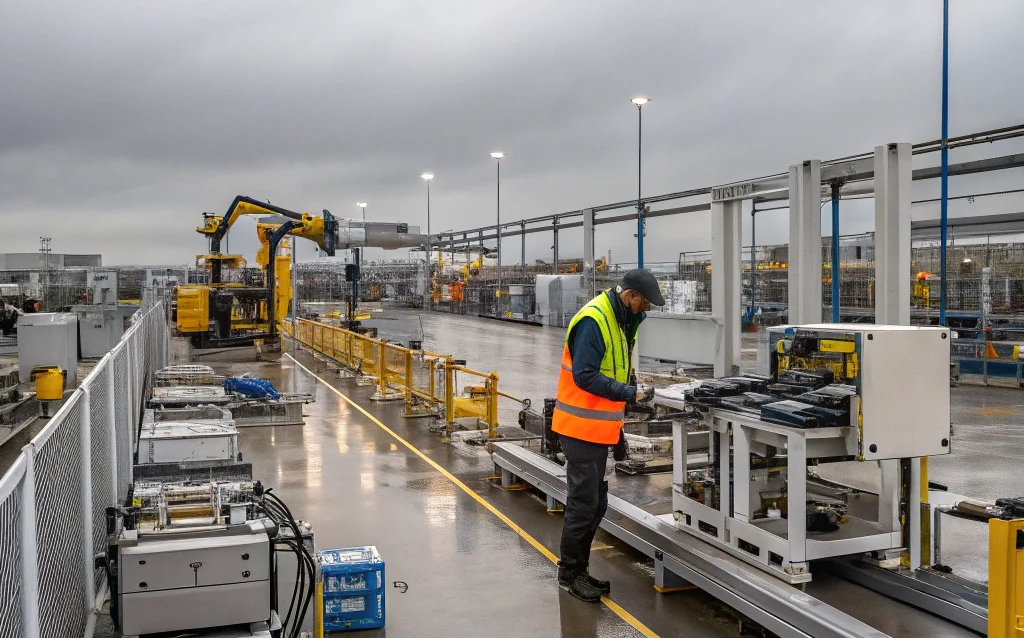

As we enter 2025, manufacturing faces a pivotal moment where data, automation, and intelligence converge to redefine competitive advantage. The global industrial landscape is no longer just focused on throughput and cost. Instead, agility, uptime, and predictive insight are becoming the strategic pillars for future-ready operations. Central to this transformation is the rapid rise of Predictive Maintenance—no longer a “nice-to-have,” but a mission-critical function bridging artificial intelligence (AI) and Industrial IoT (IIoT). The manufacturing sector is projected to invest over $15 billion globally in Predictive Maintenance technologies by 2025, cementing its role as a vital driver of operational excellence, cost efficiency, and long-term resilience.
The Rise of Predictive Maintenance in Smart Factories
Predictive Maintenance refers to the use of advanced technologies—including sensors, AI algorithms, and analytics platforms—to monitor machine health and anticipate equipment failures before they occur. This is more sophisticated than reactive maintenance, which responds after equipment fails, and more efficient than preventive maintenance, which often relies on time-based schedules regardless of actual machine condition.
Industrial IoT plays a foundational role by supplying real-time operational data from connected machinery, while AI in Manufacturing interprets this data to detect anomalies, trends, and potential risks. The result is a proactive strategy that minimizes disruptions. In sectors like automotive and heavy industry, companies like BMW and GE are already seeing ROI from Predictive Maintenance, enabling them to reduce costly downtime and improve throughput dramatically by addressing issues before they impact production.
How Predictive Maintenance Works: From Sensor to Strategy
At the core of Predictive Maintenance is a constant stream of data collected via Industrial IoT sensors installed on machinery throughout the factory floor. These sensors monitor variables like vibration, temperature, pressure, motor speed, and fluid levels. This raw data is then fed into machine learning algorithms trained on historical and real-time datasets to identify patterns, performance thresholds, and early signals of deviations.
Using this AI-powered analysis, systems don't just issue predictive alerts—they're increasingly prescriptive, recommending specific actions such as component replacements, recalibration, or maintenance scheduling. In advanced Smart Factory environments, AI even enables autonomous maintenance protocols, where diagnostics and remedies occur with minimal human oversight. For example, an edge AI device detecting excessive motor heat may automatically lower load, initiate cooling, and schedule a technician—without production downtime or manual intervention.
Competitive Benefits of Predictive Maintenance in 2025
The advantages of Predictive Maintenance in 2025 are both immediate and strategic. Manufacturers adopting these systems experience a significant reduction in unplanned downtime, which remains one of the most expensive disruptions in the industry. Early detection helps avoid catastrophic failures that require costly emergency repairs and halt production lines.
In tandem, Predictive Maintenance extends the usable life of equipment by ensuring that machines operate within optimal parameters, reducing wear and tear. Operational efficiency is further enhanced by aligning maintenance precisely with need, boosting productivity and reducing overhead in labor and part inventory management.
Moreover, worker safety improves as fault-prone equipment is monitored more effectively, reducing the likelihood of catastrophic failures or hazardous breakdowns. Companies also find it easier to meet regulatory compliance through audit trails and emissions monitoring—an increasingly important factor in a world shaped by supply chain instability and geopolitical tariffs.
Key Technologies Powering Predictive Maintenance
Several cutting-edge technologies are behind the reliability and scalability of Predictive Maintenance solutions in 2025. At the forefront are machine learning models supported by explainable AI (XAI). These tools not only detect patterns but also offer understandable reasoning behind alerts, helping technicians trust and act on insights more confidently.
Edge AI plays a key role in processing sensor data locally, enabling real-time response with minimal latency. As systems scale across large facilities, edge computing ensures responsiveness and reduces dependence on cloud latency and bandwidth limitations.
Meanwhile, digital twins—virtual models of physical assets—allow operators to simulate and visualize maintenance scenarios using AR/VR interfaces. This aids in technician training and improves accuracy during interventions. Furthermore, AI systems are increasingly trained on a factory's unique historical maintenance data, embedding deep operational knowledge into predictive engines for more context-aware insights.
Emerging Trends: What’s Next for Predictive Maintenance
Predictive Maintenance is rapidly evolving toward Prescriptive Maintenance, where AI systems move from forecasting failures to recommending precise corrective actions. Beyond that lies fully Autonomous Maintenance, where AI triggers and executes maintenance functions without human oversight, including ordering replacement parts or adjusting system parameters.
Transparency is also gaining ground. Expect broader use of explainable AI systems featuring auditing tools and logic logs—crucial for risk management and regulatory validation.
Sustainability is another trend influencing Predictive Maintenance innovation. Modern solutions now incorporate eco-efficiency models, tracking energy use, carbon output, and equipment emissions to help factories reduce their environmental footprint.
Finally, the workforce is transforming. Maintenance teams are now empowered with mobile dashboards, real-time alerts, and AR-guided workflows, recalibrating the technician's role from reactive mechanic to strategic analyst.
Industry Leaders and Investments Shaping the Future
Global leaders are aggressively adopting and investing in AI-powered maintenance. Tesla’s gigafactories leverage real-time sensor integrations, while Siemens and GE deploy vast digital ecosystems to integrate machine intelligence into core operations. Honeywell and ABB are embedding Predictive Maintenance tools across their industrial service portfolios.
Startups and platforms like C3.ai, Sight Machine, and UptimeAI are also reshaping the innovation landscape. These companies offer purpose-built AI and analytics platforms specifically tuned for manufacturing requirements, making Predictive Maintenance more accessible to small and mid-sized companies.
Investor interest aligns with financial performance metrics. As Predictive Maintenance demonstrates clear ROI—reducing downtime, improving OEE (Overall Equipment Effectiveness), and minimizing asset losses—it is increasingly viewed as a strategic capital investment, not a cost center.
The Strategic Imperative: Gaining a 2025 Competitive Edge
For manufacturers aiming to compete in 2025 and beyond, Predictive Maintenance is becoming a cornerstone of Industry 4.0 transformation. Its impact stretches beyond machinery health—touching supply chain resilience, workforce strategy, ESG compliance, and ultimately bottom-line performance.
The key strategic takeaway is this: companies that adopt Predictive Maintenance now are positioning themselves as proactive leaders. In contrast, those waiting to modernize maintenance capabilities may find themselves stuck in reactive cycles that undermine agility, resilience, and cost control.
To gain the true competitive edge, manufacturers must align Predictive Maintenance initiatives with overall business goals, integrating them into operational KPIs, workforce training, and digital infrastructure planning.
Conclusion: The Smart Manufacturer’s Playbook
Predictive Maintenance has emerged as a defining capability for manufacturers in 2025, moving from buzzword to operational backbone. It offers not just improved machine uptime, but smarter resource allocation, enhanced ROI, and futureproof strategies rooted in data and AI-driven insight.
In a world where production continuity, adaptability, and sustainability are non-negotiables, Predictive Maintenance is more than just a helpful tool—it is the linchpin for survival and success. In 2025, predictive isn’t optional. It’s how smart manufacturers stay ahead.