

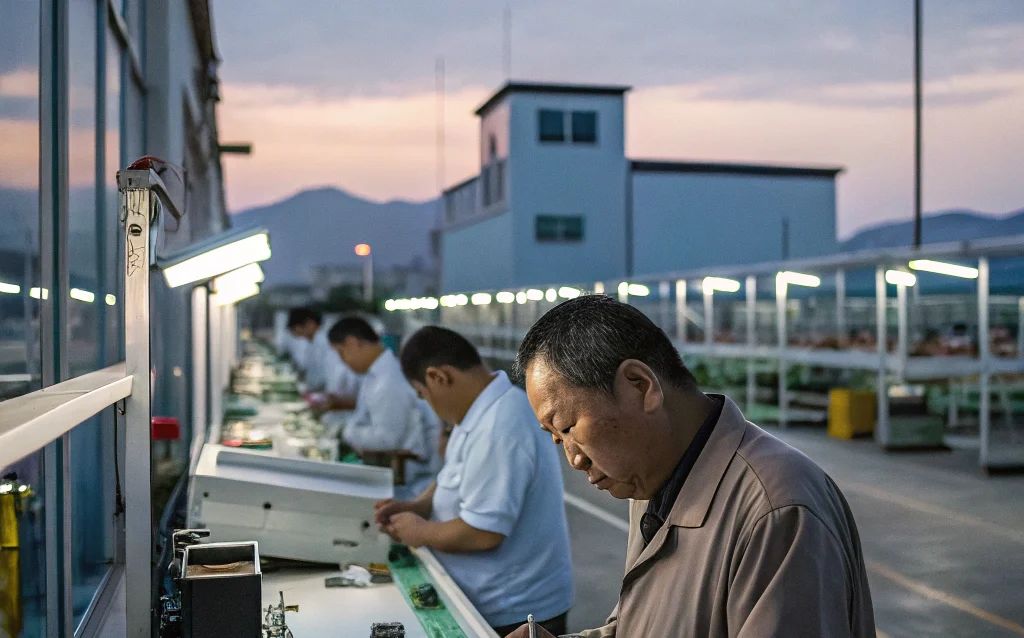

In 2025, artificial intelligence (AI) has moved from being a competitive edge to a foundational requirement in manufacturing—especially for mid-sized companies operating across borders. As global supply chains become more complex and volatile, the integration of AI into cross-border operations is not just smart—it’s essential. Mid-sized manufacturers, often constrained by leaner resources compared to large enterprises, stand to gain significantly from the cost efficiency, agility, and predictive capabilities that AI delivers.
By leveraging AI-driven cross-border operations, these businesses can unlock new international markets, build resilient logistics networks, and align production with real-time global demand—all while staying compliant with increasingly dynamic regulatory frameworks.
The Case for AI-Driven Cross-Border Operations
Global supply chains are evolving rapidly, driven by shifting regulations, geopolitical disruptions, fluctuating tariffs, and customer demand for faster, personalized delivery. For mid-sized manufacturers, managing these complexities manually or with legacy systems leads to inefficiencies and missed opportunities. AI offers the ability to navigate these challenges through advanced data analytics and machine learning algorithms.
With AI, manufacturers can automate and optimize customs and compliance processes. For instance, AI tools can analyze trade agreements and tariff codes to streamline documentation and reduce delays. When integrated with global manufacturing strategies, AI further enables accurate market demand forecasting, helping businesses strategically expand into new regions with minimized risk.
AI in Manufacturing: Foundation for Cross-Border Success
Before AI can enhance cross-border operations, it must first become an integral part of the manufacturing process itself. A data-centric infrastructure enables organizations to harness real-time insights from production floors, supply networks, and customer behaviors. With AI, production planning can be dynamically adjusted based on material availability, order forecasts, and supplier reliability.
Quality assurance also benefits, as AI-driven imaging systems detect defects in real time, improving consistency and reducing waste. Meanwhile, robotics systems powered by machine vision adapt to different production tasks and environments, allowing manufacturers to customize outputs for various international markets without sacrificing efficiency.
Predictive and Autonomous Cross-Border Logistics
AI-driven logistics is a game-changer for mid-sized manufacturers shipping across borders. AI algorithms can optimize shipping routes by analyzing customs congestion, geopolitical risks, weather forecasts, and cost variables in real time. This leads to faster deliveries and lower freight costs.
Predictive maintenance further ensures that machinery across global facilities operates with minimal downtime, using sensor data to anticipate mechanical failures before they happen. AI also makes dynamic risk assessment possible by continuously monitoring geopolitical events, supply chain fluctuations, and extreme weather. Industry leaders like Maersk and UPS already use such technologies—Maersk’s AI platforms optimize shipping schedules while UPS applies AI to enhance delivery reliability. Amazon’s use of AI in international logistics extends to automating warehouse operations and enhancing last-mile delivery in emerging markets.
AI Supply Chain Optimization: Going Beyond Borders
Managing inventory for a global operation is notoriously difficult, but AI demand modeling enables highly accurate forecasting—even during market disruptions. AI analyzes both internal sales data and external signals (weather, holidays, economic shifts) to forecast stock requirements.
Smart warehousing powered by computer vision and robotic automation ensures that inventory flows smoothly even in multi-node global architectures. Digital twin technologies mirror physical supply chains digitally, enabling real-time simulation of demand and supply scenarios—allowing for optimal stock placement and reduced lead time.
Furthermore, AI enhances supplier collaboration by monitoring compliance, timeliness, quality, and cost performance across a multinational vendor base. With AI insights, manufacturers can renegotiate contracts or shift sourcing decisions proactively.
Developing an Intelligent, Resilient Supply Chain
Connectivity between facilities and assets is critical, and IoT devices combined with edge AI provide real-time data from remote and diverse locations. These technologies enable granular visibility into inventory levels, environmental conditions, and asset location, regardless of geography.
With this real-time data, AI platforms can facilitate centralized decision-making across geographically dispersed operations. Adaptable logistics networks react instantaneously to disruptions, rerouting shipments or identifying alternative suppliers as needed. Predictive and generative AI systems simulate future scenarios and optimize contingency plans, making supply chains truly resilient, not just reactive.
Global Manufacturing Strategies for AI Integration
To compete in the global arena, mid-sized manufacturers are adopting regional production hubs that prioritize responsiveness and market proximity. AI supports these hubs with local demand analysis, labor elasticity forecasts, and logistics alignment.
AI-enabled cost modeling helps assess the total landed cost of goods across diverse regions, balancing labor, transport, and resource availability. As consumer data becomes more accessible and granular, AI also helps personalize offerings per market, ensuring targeted global expansion.
AI further supports sustainable and ethical operations by tracking emissions, monitoring supplier ESG performance, and ensuring alignment with local environmental and labor standards, all critical for maintaining a reputable international presence.
Overcoming the Challenges of AI Adoption
AI implementation isn’t without challenges. For many mid-sized firms, high upfront investment can be a major barrier. However, this should be weighed against long-term ROI—from operational savings to faster market entry. Workforce resistance is another hurdle, but AI is meant to augment human roles, not replace them. Upskilling staff and involving them in AI integration drives more seamless adoption.
Ethical AI governance is increasingly crucial, especially when handling international data subject to diverse legal frameworks. Companies like DocShipper have demonstrated how AI can optimize global logistics while maintaining ethical data practices. John Deere has redefined its manufacturing intelligence by pairing AI with human expertise, striking the right balance to drive innovation through inclusion.
The 2025 Roadmap: Implementing AI in Cross-Border Operations
Success in implementing AI begins with identifying high-impact, scalable use cases—such as logistics route optimization or predictive maintenance—and piloting them strategically. Mid-sized manufacturers must either build in-house AI expertise or partner with AI-focused vendors to develop a solid tech ecosystem.
KPIs should evolve beyond just cost metrics to include time-to-market, customer satisfaction, risk mitigation, and responsiveness. And importantly, the "30% Rule" should guide automation—using AI for tasks with high variance and labor load while preserving human input for strategy, innovation, and customer relationships.
Conclusion
As we move into 2025, AI is no longer optional—it’s a catalyst for global competitiveness in mid-sized manufacturing. From intelligent supply chains to real-time global logistics, AI-driven cross-border operations empower businesses to thrive in complexity.
The path forward requires visionary leadership, strategic investments, and a shift in company culture to embrace digital-first operations. Future innovations like quantum AI, AR interfaces for real-time interventions, and sustainability-driven automation hint at what’s next—but the time to act is now. Mid-sized manufacturers that invest in AI today will define the international market leaders of tomorrow.